From rule execution to contextual automation
Robotic Process Automation has been effective for structured, repetitive work. Its limitation appears when processes involve unstructured inputs, ambiguous data, customer language or contextual exceptions. AI extends RPA by bringing classification, extraction, prediction and language understanding into the flow.
What intelligent automation actually means
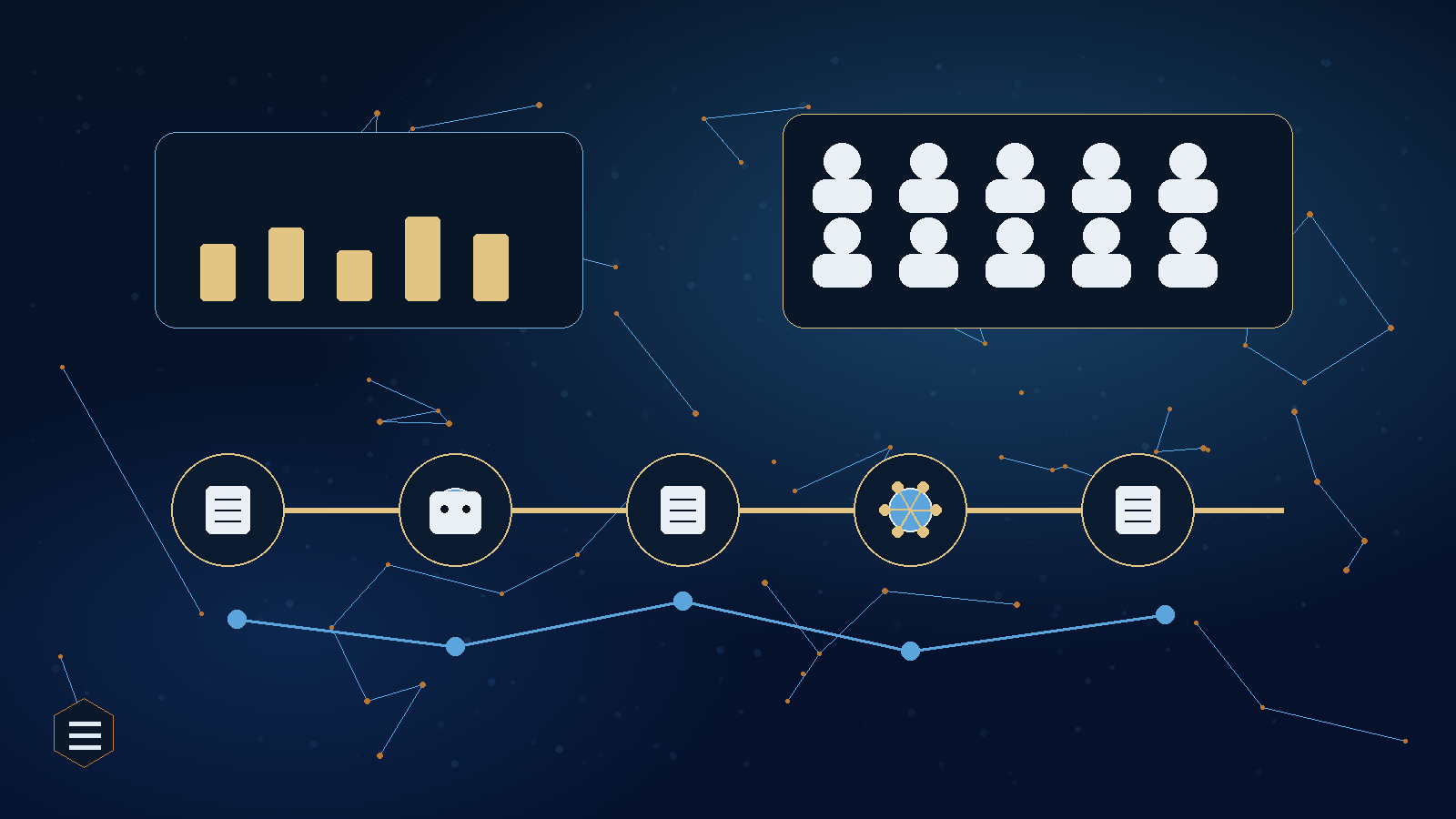
Intelligent automation is not a bot count. It is the orchestration of tasks, data, decisions and workflows across systems. In practical terms, RPA continues to execute; AI interprets documents, conversations and patterns; workflow tools route exceptions; and business dashboards measure outcomes.
BFSI and contact center relevance
In lending, servicing and operations, intelligent automation can support document intake, validation, exception routing, case allocation and audit trails. In customer engagement environments, conversational AI and RPA can reduce handling time when authentication, CRM retrieval and service fulfilment are orchestrated end to end.
Design patterns that matter
Human-in-the-loop review, exception handling frameworks and auditability are critical. Not every decision should be automated, and every automated outcome should be traceable. In regulated or customer-impacting processes, governance is part of the architecture, not a later compliance add-on.
Metrics beyond bot deployment
Success should be measured through average handling time, first-time resolution, turnaround time, rework reduction, cost-to-serve, compliance evidence and customer experience. The purpose of intelligent automation is measurable performance improvement, not a larger automation inventory.
Executive takeaway
Use an automation readiness assessment to identify where RPA, AI, workflows and human oversight can be combined safely and profitably.